
In Singapore’s fast-growing urban environment, lifts are not just convenience tools but a critical part of daily life in residential and commercial buildings. Understanding Why Regular Lift Maintenance Matters in Singapore buildings becomes important when you see how heavily people depend on vertical transport infrastructure every day. Without proper upkeep, small issues can quickly turn into serious problems like sudden breakdowns, uneven floor stops, or passenger entrapment, directly affecting passenger safety and daily comfort.
That is why lift maintenance carried out by a registered lift contractor under proper BCA guidelines is essential. It ensures strict legal compliance, helps building owners meet regulatory requirements, and extends equipment lifespan. In a dense city like Singapore, consistent servicing is not just technical work—it is what keeps buildings running safely, maintains reliability, and ensures people can move without disruption or risk.
Understanding Elevator Operational Reliability and What Affects It
A lift is an essential part of modern Singapore buildings, supporting daily movement for residents, employees, and visitors. Reliable elevator performance depends on proper maintenance, quality components, and timely inspections to ensure safe operation and reduce unexpected problems.
- Elevator operational reliability:
describes the ability of a lift system to work smoothly and safely transport passengers throughout its lifespan. Maintaining this reliability helps improve building efficiency, preventing occupant entrapment, and avoiding costly emergency repairs when an elevator breaks down. - Preventive maintenance:
is the foundation of a reliable elevator system and helps ensure equipment lasts longer. Through routine checks, cleaning, lubricating, and adjusting parts, technicians can identify minor issues before they become major system failures or lead to system failures. - Frequency of use and equipment age:
strongly affect elevator performance, especially in high-traffic environments such as busy commercial buildings and metro stations. Heavy usage increases mechanical wear and tear, requiring frequent servicing, while the age of the equipment may reduce reliability after its practical lifespan of around 20 years due to outdated electronics, mechanical wear, and limited replacement parts. - Environmental conditions and power quality:
can directly impact elevator safety and operation. Machine rooms are often sensitive to high temperatures, dust, and moisture, while excessive heat, software glitches, microchip failures, unstable electrical grids, and voltage drops can create control system faults and unexpected stops. - User handling and component protection:
are important because improper use can damage critical parts. User mishandling, including forcing doors open, overloading the cabin, and vandalism, may cause severe damage to door sensors, pulleys, and levelling mechanisms, affecting elevator safety. - Equipment quality and installation standards:
determine long-term reliability from the start. Strong initial manufacturing quality, correct installation, and reliable mechanical components help prevent early component failures, while low-quality spare parts can reduce overall durability and affect the performance of the control system.
What Happens When Lift Maintenance Is Neglected

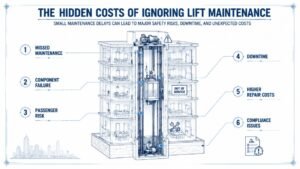
When lift maintenance is ignored, small technical issues can quickly become serious safety, financial, and compliance problems. Regular care helps prevent unexpected failures and keeps elevator systems reliable.
Safety Risks to Passengers, Staff, and Visitors
Life-threatening safety hazards: Neglected maintenance can create life-threatening safety hazards and increase risks for everyone using the building. Without routine servicing, vital parts such as cables, brakes, and door sensors may wear out, causing failures like sudden free falls, trapping passengers, and dangerous accidents.
Entrapment and mechanical failures: Damaged components such as worn-out door rollers and misaligned sensors can make doors jam, resulting in entrapment and trapping people between floors. Without regular inspection and lubrication, heavy steel cables may snap or slip, while complex mechanical brakes can experience brake failures because brakes can fail.
Electrical and emergency risks: Poorly maintained electrical components may create electrical risks, causing power surges and electrical fires. In emergencies, an Automatic Rescue Device (ARD) depends on a working backup battery to move the lift to the nearest floor and open the doors, but if the battery dies during a power outage, passengers may remain trapped in a dark and hot lift.
Downtime, Repair Costs, and Compliance Exposure
Financial burdens and costly repairs: Ignoring maintenance creates major consequences, including financial burdens, emergency repair bills, and massive financial burdens. A minor service with a small fee can prevent an emergency breakdown, but delayed action may lead to costly emergency call-outs, expensive replacement parts, and high 24/7 technician call-out rates.
Premature replacement and property impact: Like a car, an elevator requires oiling and part replacements to protect the motor, gears, and the entire system. Ignoring maintenance can cause equipment to be replaced before its expected lifespan, while a commercial building’s elevator that keeps breaking down may reduce tenants’ confidence and lower market value, creating loss of property value.
Legal trouble and compliance exposure: Under strict local building safety laws, building owners and managers are legally responsible for the safety of passengers. If neglected equipment causes injury, property owners may face legal trouble, liability, lawsuits, fines, criminal liability, and massive fines. Regular maintenance is like a bicycle care routine: you oil the chain, check the brakes, and follow a tuning process to keep parts working smoothly.
Benefits of Preventive Maintenance for Elevator Systems
Preventive elevator maintenance:
Preventive elevator maintenance helps save money and protects your investment by identifying problems early. Regularly scheduled check-ups help stop major breakdowns and keep elevator systems operating safely.
Professional inspection and care:
A professional technician performs regular servicing by cleaning parts, testing safety brakes, and applying oil where needed. This keeps the lift reliable, helps it keep running smoothly, and extends its life while supporting safety requirements.
Passenger safety:
The main purpose of maintenance is protecting the people. Technicians can spot worn-out cables and misaligned doors before they cause accidents, ensuring that emergency alarms and safety features work perfectly during emergencies.
Preventing costly repairs:
Regular care is similar to changing the oil in a car, where small actions prevent bigger problems. Addressing small issues early prevents major damage to expensive motors and electrical boards, reducing the need for emergency repairs.
Improved reliability and lifespan:
Proper maintenance keeps moving parts clean and well-oiled, helping slow down natural wear and tear. Since elevators are massive investments, this care allows the system to last for decades and avoids a full, expensive replacement.
Meeting safety standards:
Regular maintenance helps a property comply with requirements from local governments and building boards. Following strict safety rules ensures the building meets legal codes and avoids costly fines caused by safety violations.
Preventive vs. Corrective vs. Predictive Maintenance – What Singapore Buildings Actually Need
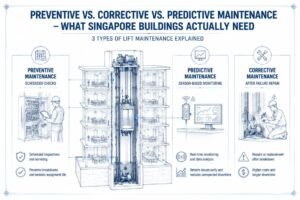
Singaporean buildings require a balanced maintenance strategy to handle daily use, safety requirements, and changing operating conditions. Choosing between preventive, corrective, and predictive methods depends on the type of equipment, risk level, and building requirements. A practical approach helps maintain lift reliability while reducing unexpected failures and repair costs.
Preventive Maintenance: Planned Care for Reliable Operations
Uses routine checks through a regular calendar schedule to prevent basic breakdowns. It helps keep equipment working and supports building running.
- Routine servicing: Includes tasks such as changing air conditioning filters and greasing elevator doors in older buildings and everyday equipment. It may involve changing parts before failure, which can sometimes create waste.
- Safety compliance: Helps buildings meet statutory routine checks, Building and Construction Authority requirements, and BCA codes under strict regulations.
Predictive Maintenance: Smart Technology for Early Detection
Uses AI, Internet of Things, and smart sensors to identify unexpected failures before they happen.
- Condition monitoring: Vibration sensors and heat sensors provide an alert through a phone when problems are detected, helping teams plan repairs early.
- Critical system protection: Suitable for high-tech commercial buildings with expensive equipment such as a heavy-duty chiller, massive air conditioning cooling towers, and main cooling towers.
Corrective Maintenance: Fixing Problems After Failure
Corrective maintenance, also called ‘reactive maintenance’, focuses on fixing issues after breakdowns occur. It is suitable for basic, low-cost, and non-essential items.
- Simple repairs: Common examples include replacing a lightbulb, repairing a lobby light, unclogging a sink, and fixing office door handles.
- Emergency risks: Failures involving a main air conditioner or water pipe breaks can cause a massive inconvenience, require a rush-fix, and leave tenants angry.
Hybrid strategy:
Singapore buildings need a hybrid approach because of the hot, humid climate, high energy demands, and strict government laws. A smart mix of preventive, predictive, and corrective maintenance protects properties in Singapore, including cooling and power systems, elevators, and compliance with mandatory lift safety requirements.
Building a Structured, Documented Maintenance Schedule
For property managers, preventing unexpected failures requires a proactive approach rather than waiting for a lift breakdown. A reliable preventative maintenance contract with a certified engineer helps keep lifts running smoothly through a clear preventative maintenance plan based on the manufacturer’s schedule. Routine checks, including monthly servicing for high-use lifts and quarterly checks for low-use systems, help identify issues before they create costly interruptions.
Simple daily on-site visual checks can also prevent common problems. Cleaning teams should clear door tracks, remove debris, and vacuum areas that affect the door to open and close properly. Staff should also check levelling, ensuring the lift floor is completely level with the building floor when stopped, while reporting unusual grinding or squeaking noises when the lift travels to detect early mechanical issues.
Tracking Fault Trends and Technician Reports
Effective maintenance depends on understanding equipment condition over time. Maintaining an active log of sick assets, parts, and individual components allows technicians to monitor equipment health, identify fault patterns, and fix problems before an outage occurs. Using remote monitoring and diagnostic solutions enables modernised lifts to track performance 24/7 and alert engineers when a problem appears, reducing downtime and improving reliability.
Working with Certified, Experienced Technicians
Reliable lift performance depends on working with qualified experts, including certified Original Equipment Manufacturer (OEM) technicians and reputable, licensed lift contractors. These professionals can support upgrading and modernizing older lifts through Plan for lift modernisation, improving the control system, sensors, and drive mechanics.
For lifts that are 15 to 20 years old, parts obsolescence makes modernising replacement parts difficult because they are no longer manufactured. Modernising these systems can restore reliability. At the same time, educate tenants and users through preventing overloading; clear, visible signage showing the maximum weight capacity and passenger limit; and proper moving protocols to prevent damage to the motor, braking systems, and electronic safety sensors caused by heavy items or users who manually hold the doors open.
Regulatory & Safety Standards That Make Maintenance Non-Negotiable
Regular lift maintenance in Singapore buildings is guided by strict safety requirements. These standards help reduce risks, protect users, and ensure maintenance work is carried out safely.
- Safety compliance: A safety guide such as NFPA 70E helps workers manage electrical dangers and avoid risks like electric shocks during maintenance.
- Worker protection: ISO 45001 is an international rulebook that helps keep workers safe and healthy while performing their jobs through safer work practices.
- Building requirements: Local building codes and local rules ensure buildings maintain important systems, including elevators, fire doors, and cooling systems, through a regular schedule.
Key Elevator Components That Determine Long-Term Reliability
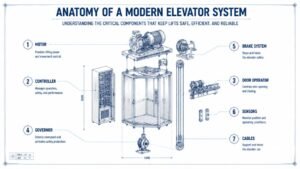
Key elevator components include high-efficiency gearless traction motors, microprocessor controllers for traffic management, and door operators to prevent service interruptions. Safety is maintained through calibrated governors and braking systems that activate during overspeed events
Lift Maintenance Solutions Built Around Reliability and Compliance
A structured maintenance process helps prevent failures, protect passengers, and maintain smooth building operations.
Proactive maintenance:
A proactive approach with regular inspections helps reduce unexpected breakdowns while supporting passenger safety and meeting regulatory standards within budget constraints.
Component reliability:
Moving parts need constant care and correct greasing to maintain performance. Governor and brake systems require routine testing to ensure safety functions work properly.
Compliance management:
Accurate logs help verify compliance during audits, while independent, thorough examinations conducted biannually confirm that lift systems meet requirements. Technicians can identify and mitigate open hazards through proper checks.
Safety readiness:
Lift systems must follow updated local safety codes, with weight limits and emergency data kept visible. A maintenance agreement should include mandatory safety checks, complete past maintenance logs, and ensure emergency communication systems work perfectly so onsite teams can handle entrapments.
Elevator Maintenance Solutions Offered by Union Jack Elevators
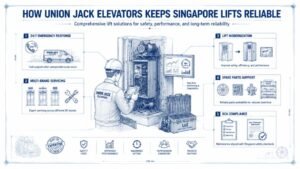
Union Jack Elevators provides multi-brand maintenance solutions supported by skilled technicians to improve system lifetime and uptime. Their reliable service focuses on preventative servicing through scheduled intervals, including cleaning, oiling, adjusting, and detailed component testing to maintain safe lift performance.
The company offers 24/7 emergency dispatch with a dedicated round-the-clock call centre and rapid-response repair teams to manage breakdowns and entrapments. Their system modernisation includes upgrading legacy controllers, improving aesthetics, and replacing important parts to support BCA regulations. Spare parts stocking helps maintain an inventory of essential parts and reduces extended downtime.
Union Jack Elevators also provides flexible contracts with customisable, transparent service agreements that are tailored to commercial and residential budgets. Through advanced technology, such as Variable Voltage Variable Frequency (VVVF) controls and European and Japanese performance innovations, they achieve certified compliance as a BCA Grade L4 (ME09) contractor with BizSafe Star, ISO, and AMEU unionised accreditations.
Why Building Owners Across Singapore Trust Union Jack Elevators
Building owners, strata managers, and facility executives trust Union Jack Elevators (UJE) for reliable vertical transportation management. As an independent provider, UJE offers flexible alternatives to traditional OEM restrictions, helping properties maintain better control over costs, performance, and lift operations.
With structured preventive maintenance, strict BCA Grade L4 (ME09) Contractor compliance, and BizSafe Star accreditation, UJE reduces breakdown risks while improving asset reliability. Their flexible contracts, modernisation solutions, energy-efficient variable voltage variable frequency (VVVF) controls, and 24/7 response teams help Singapore buildings achieve safer operations, longer lift lifespans, and better long-term value.
Conclusion
Regular lift maintenance is essential for keeping Singapore buildings safe, reliable, and compliant with strict safety requirements. From preventive servicing and component inspections to modern technology and professional support, proper maintenance helps reduce breakdowns, extend lift lifespan, and protect passengers.
Working with experienced and certified lift contractors ensures building owners can maintain smooth operations while avoiding costly repairs and unexpected downtime. With reliable solutions, advanced systems, and 24/7 support, Union Jack Elevators helps Singapore properties achieve long-term lift performance and greater operational confidence.
FAQS
Why is regular lift maintenance important for Singapore buildings?
Regular lift maintenance ensures passenger safety, improves reliability, and prevents unexpected breakdowns in high-use buildings. It also helps buildings meet BCA safety requirements and extends the lifespan of lift systems.
How often should lifts be serviced in Singapore buildings?
Lifts should typically undergo regular servicing according to manufacturer guidelines and BCA requirements, with high-traffic lifts often requiring more frequent checks. A planned maintenance schedule helps identify issues before they become major failures.
What checks are performed during routine lift maintenance?
Routine lift maintenance includes inspecting safety brakes, door systems, cables, motors, controllers, sensors, and lubrication points. Technicians also test safety features, check for performance issues, and record maintenance findings.
How can regular lift maintenance help reduce long-term repair costs?
Preventive maintenance identifies small problems early before they develop into expensive breakdowns or component failures. Regular servicing reduces emergency repair costs, extends equipment lifespan, and avoids premature lift replacement.
How much does lift maintenance cost in Singapore?
Lift maintenance costs in Singapore depend on factors such as lift type, building size, usage level, contract scope, and required services. Most providers offer customised maintenance plans based on the building’s operational needs and budget.