
The Complete Guide to Lift & Elevator Maintenance in Singapore gives a comprehensive overview of how lifts, elevators, and escalators keep modern buildings running through the constant movement of people and goods in daily life. These systems must ensure efficient, reliable, uninterrupted, and safe operation, supported by a strong maintenance plan for critical lift systems.
From experience, when lift maintenance management is weak, building operations can quickly suffer from disruptions, accidents, and costly repairs, reducing reliability and shortening the longevity of assets and lift infrastructure. A proactive approach supported by preventive maintenance, routine & regular inspections, lubrication, and component replacements is essential to achieve efficient functioning, handle complex repairs, and avoid common challenges and pitfalls. A strong maintenance strategy, robust maintenance schedule, and well-structured maintenance programme, supported by key components, best practices, and a computerised maintenance management system (CMMS), ensure proper and efficient management.
At the operational level, maintenance teams, facility managers, and teams must ensure safe & reliable operation and compliance with safety regulations and regulatory requirements, protecting employees, visitors, and businesses from potential harm and hefty fines. This supports maintenance, extends lifespan, minimizes downtime, improves maintenance system efficiency, protects building operations, optimizes the maintenance budget, reduces maintenance costs, and maintains performance across Singapore’s infrastructure.
Why Regular Lift Maintenance Matters for Building Safety and Performance

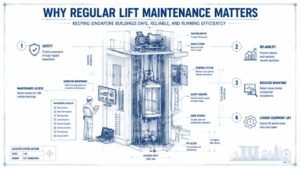
Regular lift maintenance matters because a lift is not just a convenience but a critical safety system inside a building. In Singapore’s high-rise offices, HDB blocks, condominiums, malls, hotels, and mixed-use developments, even a small fault can affect passenger safety and building operations. This is why elevator maintenance matters in Singapore becomes clear when looking at real operational risks and system reliability.
Here are the key reasons why maintaining a strict lift maintenance schedule is important:
- Prevents Operational Failures & Downtime: Regular inspections help detect early issues such as door failures, brake wear, abnormal vibration, levelling issues, and emergency communication faults before they escalate. This keeps passenger flow smooth and prevents costly disruptions.
- Ensures Passenger Safety: Lifts rely on complex mechanical and electrical systems. Routine checks ensure safety components like brakes, alarms, sensors, and door interlocks function properly, protecting residents, visitors, and workers from accidents.
- Protects Asset Value & Improves Reliability: Consistent maintenance reduces wear and tear, extends equipment lifespan, and prevents premature breakdowns. This helps protect asset value while improving long-term operational reliability.
- Ensures Regulatory Compliance & Operational Control: Regular servicing ensures compliance with local safety regulations and inspection requirements in Singapore, reduces legal risks, and gives building owners better control over maintenance planning and costs.
Major Advantages of Routine Elevator Maintenance for Companies
Regular elevator maintenance benefits businesses far beyond technical performance. In offices, malls, hotels, hospitals, factories, and mixed-use developments, lift reliability directly impacts customer experience, staff productivity, tenant satisfaction, logistics flow, and brand reputation. A lift outage during peak hours can cause delays, long queues, disrupted operations, and customer complaints. This is why consistent maintenance is essential for operational stability and business continuity.
Here are the key benefits businesses gain from regular elevator maintenance:
- Reduces Operational Disruptions & Downtime: Routine servicing keeps elevators in stable condition and detects early defects before they lead to breakdowns. This ensures smooth vertical transportation for staff, customers, and logistics movement.
- Improves Cost Predictability & Lowers Repair Expenses: Preventive maintenance helps avoid sudden failures and expensive emergency repair charges. It also allows facility teams to plan maintenance budgets more accurately.
- Enhances Safety & Compliance Assurance: Regular inspections ensure lifts meet safety regulations and compliance standards, reducing legal risks and protecting businesses from liability exposure and penalties.
- Extends Equipment Lifespan & Asset Value: Proper lubrication, calibration, and timely component replacement reduce wear and tear, delay major system failures, and extend the overall lifespan of elevator systems.
- Supports Better User Experience & Brand Reputation: Reliable, smooth elevator performance improves tenant satisfaction and visitor experience, strengthening trust in the building and protecting brand image.
- Improves Operational Planning & Control: Regular servicing gives facility managers clearer maintenance schedules, fewer unexpected issues, and stronger control over daily building operations.
Emerging Trends Shaping the Future of Lift Maintenance
Emerging trends in lift maintenance are changing how building owners manage elevator reliability. Remote monitoring, IoT sensors, cloud-based fault reporting, predictive analytics, vibration analysis, infrared thermography, and CMMS integration are making maintenance more data-driven. Instead of depending only on fixed schedules or passenger complaints, technicians can track door cycles, motor condition, fault frequency, temperature changes, and abnormal operating patterns. This helps identify early warning signs before a breakdown occurs.
Another trend is outcome-based maintenance, where performance, uptime, safety, and responsiveness become more important than simply completing routine visits. For Singapore’s high-rise environment, these technologies can improve transparency, reduce downtime, and support smarter maintenance decisions.
How Technology Will Shape Elevator Maintenance in Singapore
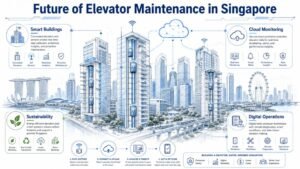
The future of elevator maintenance in Singapore will likely be more proactive, digital, and performance-focused. As buildings become smarter and lift systems become more connected, maintenance teams will rely increasingly on remote diagnostics, predictive maintenance, digital records, and lifecycle planning. Building owners will expect clearer reporting, faster response, stronger compliance support, and better evidence behind repair recommendations. Sustainability will also matter more, with modernisation decisions considering energy efficiency, component durability, and long-term operating cost. However, technology will not replace skilled technicians.
The best results will come from combining experienced elevator specialists with real-time data, proper safety standards, and a maintenance culture focused on reliability, passenger safety, and asset value.
Compliance and Safety Requirements in Singapore Elevator Maintenance
In lift maintenance in Singapore, a strong focus on lift care, elevator upkeep, and lift operational reliability is heavily regulated to ensure public safety. Compliance with regulatory standards and safety requirements is both a legal obligation and a moral responsibility. Staying up to date with the latest standards and codes is crucial for responsible lift management. Standards like ASME A17.1/CSA B44 define the safety of elevators and escalators through guidelines for design, construction, installation, maintenance, and inspection. In Singapore, local building codes and municipalities have lift safety and maintenance requirements, while the Workplace Safety and Health Act (WSH) in Singapore supports worker safety during maintenance activities through proper training and equipment.
From our experience in lift maintenance in Singapore, a strong system must include regularly reviewing updates and ensure alignment with relevant standards. We conduct regular audits, including internal audits, to maintain compliance with applicable regulations. Every step is controlled through documents, findings, and corrective actions. Teams follow training and certification so maintenance personnel are trained, certified, and able to perform lift maintenance tasks with proper records and training.
Failure to comply can lead to hefty fines, legal liabilities, and high risk, so a robust compliance programme is the cornerstone of effective lift maintenance. A comprehensive maintenance plan must be carried out in accordance with occupational health and safety regulations and industry standards, supported by regular inspections, certifications, and accredited professionals. Hence, the lift system meets requirements and operates safely.
What Every Building Should Include in Routine Elevator Maintenance
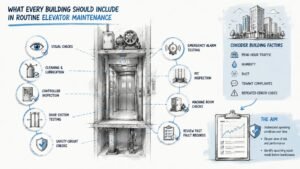
Routine elevator maintenance should be structured, documented, and matched to the lift type, usage level, age, and manufacturer recommendations. A proper routine normally includes visual checks, cleaning, lubrication, controller inspection, door system testing, safety circuit checks, emergency alarm testing, pit inspection, machine room checks, and review of past fault records. In busy Singapore buildings, technicians should also consider peak-hour traffic, humidity, dust, tenant complaints, and repeated error codes from the lift controller. The aim is not only to “service the lift”, but to understand its operating condition over time. A strong routine gives facility managers, MCSTs, and building owners a clearer picture of risk, performance, and upcoming repair needs before breakdowns happen.
Preventive Elevator Maintenance and Its Long-Term Benefits
Preventive elevator maintenance focuses on fixing small issues before they become unsafe, expensive, or disruptive. Instead of waiting for a passenger lift to stop between floors or for doors to jam during peak hours, technicians inspect wear-prone components such as ropes, rollers, brakes, bearings, guide shoes, door operators, relays, sensors, and control panels. The benefits of preventive maintenance include fewer emergency callouts, better lift availability, longer component life, improved ride comfort, and stronger compliance readiness. For commercial buildings, hotels, hospitals, and residential developments, this approach protects both people and business continuity. Over time, preventive work also helps owners plan budgets more accurately because major replacements become easier to forecast.
What Elevator Technicians Check During Maintenance Inspections
What Elevator Technicians Check during Maintenance depends on the lift’s design, but a proper inspection always covers mechanical, electrical, and safety systems, as well as operational performance. Technicians ensure that all critical lift components are functioning correctly, safely, and in compliance with maintenance standards.
A full inspection typically includes the following key areas:
- Doors & Door Systems: Technicians check landing doors, door interlocks, sensors, and door operation performance to ensure smooth opening/closing, safe entry, and prevention of door-related accidents.
- Ride Quality & Levelling Accuracy: They test levelling accuracy, ride smoothness, acceleration, deceleration, vibration levels, and stopping precision to ensure passenger comfort and eliminate tripping hazards.
- Safety Systems & Emergency Devices: Technicians inspect emergency lighting, alarm systems, communication devices, safety gear, overspeed governors, buffers, and limit switches to ensure passenger safety during faults or emergencies.
- Mechanical Components: Key components such as brakes, traction machines, ropes, pulleys, guide rails, counterweights, and lift pits are inspected for wear, alignment, lubrication, and structural integrity.
- Electrical & Control Systems: Technicians review electrical panels, wiring, controller systems, fault logs, and operational data to detect overheating, faults, abnormal signals, or repeated issues.
- Diagnostics & Modern Monitoring Tools: In modern systems, technicians may use diagnostic tools, vibration analysis, infrared thermal checks, and remote monitoring data to detect hidden or early-stage faults.
A good elevator inspection is not rushed; it links visible symptoms with root causes, ensuring repairs are accurate, safe, and properly documented for long-term system reliability.
Creating a Comprehensive Elevator Maintenance Schedule
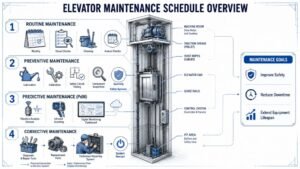
In real-world routine elevator maintenance, a strong system starts with a clear maintenance schedule and proper maintenance management. In Singapore, this is important due to strict regulatory requirements, high lift usage, and different environmental conditions. A solid plan includes preventive elevator maintenance because the benefits of preventive maintenance improve the safety of passengers and overall lift operation. With manufacturer recommendations, teams maintain better efficiency, supported by clear and detailed procedures.
A good maintenance schedule includes regular monthly inspections, quarterly servicing, and annual maintenance. Engineers rely on daily visual inspections and annual comprehensive safety checks for consistency and accuracy. Tasks like quarterly lubrication, cleaning, and calibration support electrical control systems, and safety circuits. Key parts such as cables, pulleys, brakes, tension mechanisms, bearing wear, and motor vibrations are checked to define scope, frequency, and correct task frequency.
Modern systems use predictive maintenance with PdM programmes, supported by vibration analysis and infrared thermography to detect early signs of potential problems, wear, and damage. This strengthens preventive maintenance tasks and protects critical components while reducing risks and minimising issues.
When unexpected breakdowns occur, teams apply corrective maintenance with repairs, component replacements, upgrades or modernization tasks. Through examinations and safety checks, engineers ensure systems are restored safely and efficiently, especially for critical components affecting reliability and passenger safety.
Leveraging CMMS for Efficient Elevator Maintenance Management
In Singapore’s elevator sector, CMMS is used as a centralized platform and an indispensable tool for modern lift management. It strengthens lift maintenance management by creating a more structured system for modern lift maintenance. Operations become far more controlled once everything is managed under one system instead of scattered records.
The key advantage is in scheduling, tracking, and documenting maintenance activities, which directly improve efficiency and ensure stronger compliance. This leads to more stable equipment uptime and clearly improves it in real operations. Many companies in Singapore now rely on this approach, and about 60% of companies report better reliability and performance after adopting CMMS in their maintenance workflows.
Extending Lift Lifespan Through Proactive Maintenance Strategies
Extending lift lifespan through maintenance requires more than basic servicing. A proactive strategy looks at how the lift is used, how often faults occur, which components are ageing, and whether the system is still suitable for the building’s traffic demand. Regular lubrication, alignment, adjustment, cleaning, testing, and timely component replacement can reduce stress on motors, brakes, guide rails, ropes, door mechanisms, and controllers. Proactive maintenance also includes analysing fault trends, reviewing technician reports, and planning upgrades before performance declines sharply. In Singapore’s dense built environment, lifts often work hard every day, so extending lifespan depends on disciplined care, accurate records, and decisions based on condition, not guesswork.
Lifecycle Planning for Elevator Systems
Lifecycle Planning for Elevator Systems helps building owners manage a lift from installation to maintenance, repair, modernisation, and eventual replacement. Every elevator has a lifecycle, and different stages require different decisions. A newer lift may need strong preventive routines and warranty tracking, while an older lift may require closer monitoring of major components such as controllers, machines, ropes, brakes, and door systems. Lifecycle planning helps owners decide when to repair, when to modernise, and when full replacement becomes more practical.
It also supports budgeting because capital expenditure can be planned years ahead. In Singapore, this is especially useful for MCSTs, commercial landlords, and facility managers responsible for long-term asset reliability.
Frequent Lift Maintenance Errors & Prevention Tips
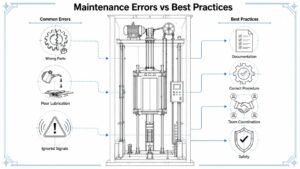
Poor lift maintenance often comes from best intentions, but ignoring preventive maintenance leads to common pitfalls like breakdowns, maintenance errors, and reduced operational reliability. This increases risks and affects lift safety in daily elevator maintenance.
Using incorrect non-OEM parts or substandard parts instead of OEM parts or approved equivalent parts reduces system quality. It directly impacts lift performance and damages lift components over time.
Improper lubrication or excessive lubrication against manufacturer recommendations, lubrication types, and lubrication frequencies causes wear and damaged components, affecting elevator reliability.
Ignoring warning signs, unusual noises, and vibrations due to inadequate training or untrained personnel can turn minor problems into major breakdowns, requiring urgent prompt investigation by technicians.
Proven Best Practices for Safe Lift Maintenance
- Strong lift maintenance starts with documenting everything using detailed records of maintenance activities, inspections, repairs, and component replacements to support better maintenance documentation.
- Follow established and proper maintenance procedures to improve control and ensure safer operations across maintenance personnel, operators, and building management.
- Maintain clear communication flow between teams to improve maintenance tasks, reduce errors, and ensure smooth coordination in elevator maintenance work.
- Focus on safe & reliable operation to minimize downtime, reduce risk, and ensure strong lift reliability and accident prevention.
Passenger Lift Repair: What Building Owners Should Know
What Building Owners Should Know begins with one key point: not every lift fault should be treated as a simple breakdown. Door faults, brake issues, levelling errors, abnormal noises, tripping, sudden stops, or repeated controller faults may indicate deeper mechanical or electrical problems. Building owners should ensure repairs are handled by qualified technicians using approved parts, proper troubleshooting methods, and clear documentation.
Temporary fixes can create recurring failures and higher long-term costs. Owners should also communicate clearly with tenants or occupants when lift downtime affects access. A professional repair process should include diagnosis, risk assessment, corrective work, testing, and confirmation that the lift is safe before returning it to service.
Best Practices for Commercial Lift Maintenance
Best practices for commercial lift maintenance depend on scheduled preventive servicing, strict compliance with local safety codes, and consistent care of critical lift components. In commercial buildings, lifts handle heavy traffic, visitors, tenants, staff, deliveries, and daily business movement, so any breakdown can affect passenger safety, customer experience, and building operations. A strong maintenance approach helps facility managers reduce unexpected failures, extend lift lifespan, improve reliability, and maintain safer vertical transport systems.
Here are the key best practices for effective commercial lift maintenance:
- Establish a Strict Servicing Schedule: Commercial lifts should follow a clear maintenance schedule with monthly checks, quarterly servicing, and semi-annual inspections. Routine visual inspections help identify wear, sensor issues, abnormal noises, and early mechanical problems before they become major faults.
- Prioritize Cleaning and Lubrication: Moving parts such as bearings, gears, guide rails, rollers, and door mechanisms should be cleaned and lubricated regularly to reduce friction, prevent premature wear and tear, and support smoother lift operation.
- Keep Door Systems in Good Condition: Door tracks, sensors, landing doors, and car doors must be kept free from dirt, debris, and alignment problems. Since door faults are one of the most common causes of lift breakdowns, regular door maintenance is essential for safe and reliable operation.
- Maintain Comprehensive Documentation: Facility managers should keep detailed service logs, repair records, replacement history, inspection reports, and compliance documents. Proper documentation supports regulatory compliance, audit readiness, and better long-term maintenance planning.
- Monitor Safety Systems and Emergency Features: Emergency alarms, communication devices, lighting, safety sensors, brakes, and control systems should be tested regularly to ensure passenger safety and compliance with statutory inspection requirements.
- Focus on Modernization and Efficiency: Outdated control systems, machinery, and safety components should be reviewed for modernization when they affect performance, speed, energy efficiency, or reliability. Any upgrade must follow manufacturer standards and local safety regulations.
- Work with Qualified Lift Specialists: Commercial lift maintenance should be handled by trained and experienced technicians who understand mechanical systems, electrical controls, safety devices, and proper troubleshooting procedures. This ensures repairs are accurate, safe, and properly recorded.
How to Evaluate Lift Maintenance Providers
How to Evaluate Lift Maintenance Providers requires looking beyond the lowest contract price. Building owners should assess technical capability, BCA registration where applicable, experience with the lift brand, response time, spare parts availability, documentation quality, safety culture, technician training, and ability to handle both routine servicing and complex repairs.
A good provider should explain findings clearly, provide proper service reports, recommend realistic repairs, and avoid vague statements such as “monitor first” without technical reasoning. Ask about emergency support, preventive maintenance scope, CMMS reporting, modernisation capability, and past experience with similar buildings. The right provider should act like a long-term asset partner, not just a monthly servicing vendor.
Why Experience Matters in Lift Maintenance Services
Why Experience Matters in Lift Maintenance is that elevator systems combine mechanical, electrical, electronic, and safety-critical components. An experienced technician can often connect symptoms faster: a door fault may be linked to roller wear, sensor misalignment, controller signals, or landing door resistance. A vibration issue may come from guide shoes, bearings, traction problems, or alignment.
Experience also matters during troubleshooting, annual testing, emergency recovery, and repair prioritisation. In Singapore buildings with high usage and strict safety expectations, poor diagnosis can lead to repeated breakdowns and unnecessary costs. Experienced maintenance teams bring better judgement, safer work practices, clearer documentation, and more reliable recommendations for repair, replacement, or modernisation.
Choosing Experienced Elevator Specialists for Long-Term Reliability
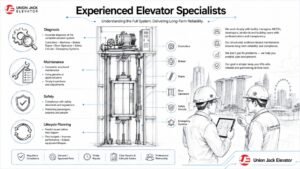
Choosing experienced elevator specialists is one of the most important decisions for long-term lift reliability. The right specialist should understand the full system, including controllers, machines, brakes, ropes, door operators, safety circuits, emergency systems, and regulatory requirements. They should also be able to work with facility managers, MCSTs, developers, landlords, and building users in a professional way. Long-term reliability comes from accurate diagnosis, consistent maintenance, genuine or approved parts, timely repairs, and clear lifecycle advice.
A strong elevator specialist like Union Jack Elevators does not simply respond when something breaks; they help owners predict problems, plan budgets, improve performance, and keep passengers safe through structured, evidence-based maintenance.
Conclusion
Effective lift care is essential for ensuring safety, reliability, and long-term performance in modern buildings. A well-planned maintenance strategy not only reduces unexpected breakdowns but also improves compliance, extends equipment lifespan, and enhances user experience. Building owners and facility managers who follow structured servicing schedules and work with qualified specialists can significantly reduce operational risks and costs. The Complete Guide to Lift & Elevator Maintenance in Singapore highlights the importance of preventive care, regular inspections, and modern technologies like CMMS and predictive monitoring. By applying these best practices consistently, businesses in Singapore can achieve safer operations, better efficiency, and more dependable vertical transportation systems for years to come.
FAQs
What is lift maintenance, and why is it important in Singaporean buildings?
Lift maintenance is the regular inspection, servicing, and repair of elevator systems to ensure safe and reliable operation. In Singapore, buildings need to prevent breakdowns, ensure passenger safety, and meet strict regulatory compliance requirements.
How often should lifts be serviced in Singapore?
Lifts in Singapore are typically serviced on a monthly basis, with additional quarterly servicing and annual inspections depending on usage and manufacturer recommendations. High-traffic buildings may require more frequent checks to maintain safety and performance, you can read more here.
What do technicians check during elevator inspections?
Technicians inspect key systems, including doors, safety devices, electrical controls, mechanical components, and ride quality. They also check brakes, sensors, cables, and emergency systems to ensure the lift operates safely and efficiently.
What safety checks are mandatory for lifts in Singapore?
Mandatory safety checks include testing emergency alarms, door interlocks, braking systems, safety circuits, and communication devices. These checks ensure compliance with BCA requirements and the Workplace Safety and Health (WSH) Act for safe operation.
What are the benefits of regular elevator maintenance for businesses?
Regular elevator maintenance reduces downtime, improves safety, and lowers long-term repair costs. It also enhances operational efficiency, supports compliance, extends equipment lifespan, and improves customer and tenant experience in commercial buildings.
How much does lift maintenance cost in Singapore?
Lift maintenance costs in Singapore vary depending on lift type, building size, usage level, and service scope. Costs are usually structured as monthly maintenance contracts, with additional charges for repairs, parts replacement, or modernization work.